When developing a custom cookie cutter, choosing the right manufacturing method can have a major impact on your development cost, MOQ, design flexibility, and production lead time.
Traditional custom cookie cutters are commonly made from stainless steel or injection-molded plastic such as PP or ABS. These methods are reliable for mass production, but they usually require tooling, higher minimum order quantities, and longer development times.
For small-batch projects, complex shapes, seasonal products, promotional items, and customized cookie cutters, 3D printed cookie cutters offer a much more flexible alternative.
At Canzo Kitchenware, we provide custom 3D printed cookie cutters as well as stainless steel and injection-molded cookie cutters, helping customers choose the most suitable manufacturing method based on their design and order quantity.
What Is a 3D Printed Cookie Cutter?
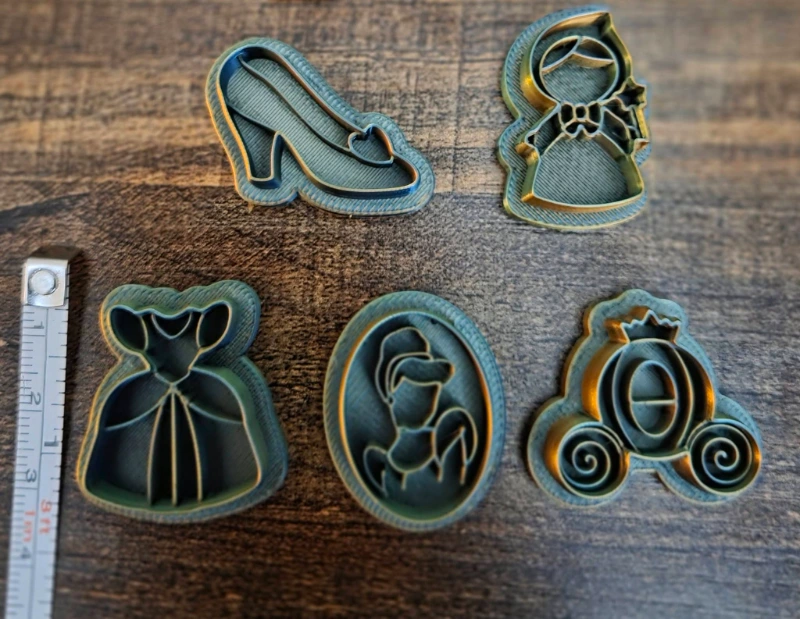
A 3D printed cookie cutter is a custom cookie cutter produced directly from a digital 3D model using a 3D printer.
Unlike traditional manufacturing methods, 3D printing does not require a physical mold.
For a custom project, customers can simply provide a 2D flat design, drawing, image, logo, or reference artwork. Our team can convert the design into a 3D cookie cutter model and prepare it for printing.
For many designs, the first physical sample can be produced in approximately 1 hour, making 3D printing an excellent solution for rapid prototyping and small-batch production.
This is particularly useful when you need to test a new cookie shape before committing to expensive tooling or a large production order.
1. No Expensive Mold Is Required
One of the biggest advantages of 3D printed cookie cutters is that no injection mold or metal forming mold is required.
With traditional injection molding, a custom PP or ABS cookie cutter requires an injection mold to be designed and manufactured before mass production can begin.
Depending on the complexity of the design, the mold can represent a significant upfront investment.
With 3D printing, the production process is different:
2D design → 3D modeling → 3D printing → finishing → packaging
There is no need to manufacture a traditional production mold.
This makes 3D printing particularly attractive for:
- New product development
- Limited-edition cookie cutters
- Seasonal designs
- Promotional products
- Event and festival themes
- Museum and gift-shop products
- Personalized cookie cutters
- Small-batch orders
- Complex or unusual shapes
- Market testing before mass production
If you are not sure whether a new cookie cutter design will sell, 3D printing allows you to test the product without making a large tooling investment.
2. No Traditional 2,000-Piece MOQ
Another important advantage is the lower quantity requirement.
Traditional custom production often works best when the order quantity is high enough to justify tooling and production setup costs. For many custom cookie cutter projects, buyers may need to consider an MOQ of around 2,000 pieces or more, depending on the material and manufacturing method.
3D printing works differently.
Because each cutter can be produced directly from a digital file, you do not need to produce thousands of pieces simply to recover the cost of a mold.
This makes 3D printed cookie cutters suitable for projects involving:
- Tens of pieces
- Hundreds of pieces
- Several hundred pieces per design
- Multiple different designs
- Limited production runs
- Trial orders
For example, if you need 100 pieces of a highly customized cookie cutter for a special event, creating an injection mold may not be economically practical. A 3D printed solution can be much more suitable.
3. More Design Freedom for Complex Cookie Cutters
Design flexibility is another major advantage of 3D printed cookie cutters.
Stainless steel cookie cutters are excellent for many traditional shapes, but certain complicated designs can be difficult to manufacture using formed metal.
Injection molding can create more complex shapes, but the design still needs to be suitable for the injection molding process and the mold structure.
3D printing provides greater freedom because the cutter is built layer by layer directly from the digital model.
This makes it possible to create:
- Detailed character shapes
- Irregular outlines
- Logos
- Cartoon characters
- Animals
- Architectural shapes
- Special symbols
- Custom silhouettes
- Novelty cookie cutters
- Intricate geometric designs
For customers who need a cookie cutter based on a unique logo, mascot, character, or artwork, 3D printing can significantly simplify the development process.
3D Printing Is Especially Useful for Complex Shapes
Suppose a customer provides a detailed 2D illustration of a mascot.
With a traditional stainless steel cutter, the design may need to be simplified to make it manufacturable.
With injection molding, the design may need to be modified to meet tooling and molding requirements.
With 3D printing, the digital design can be converted into a 3D model while retaining much more of the original character and outline.
This is one reason why custom 3D printed cookie cutters are becoming an attractive option for niche and creative products.
4. Faster Product Development
Traditional tooling requires several steps:
Design → Mold design → Mold manufacturing → Trial production → Mold adjustment → Sample approval → Mass production
This process can take considerably longer when revisions are required.
3D printing eliminates the traditional mold-development stage.
At Canzo Kitchenware, customers can provide a 2D flat pattern, and our team can develop the corresponding 3D model for the cookie cutter.
For many projects, a physical sample can be printed in approximately 1 hour.
If the customer wants to modify the shape, size, or details, we can adjust the digital model and print another sample instead of modifying or rebuilding a production mold.
This makes the development process much more flexible.
5. Easy Design Modification
Imagine that you have created a cookie cutter but later decide that:
- The cutter should be 10% larger.
- A corner should be wider.
- A character’s outline should be changed.
- The handle should be modified.
- A logo needs to be adjusted.
- The cutter needs to be compatible with a matching cookie stamp.
With traditional tooling, these changes may require mold modifications or even a new mold.
With 3D printing, the digital model can simply be modified and printed again.
This makes 3D printing particularly suitable for product development and design iteration.
6. 3D Printed Cookie Cutters Can Combine Cutting and Embossing Designs
Another interesting application is the combination of a cookie cutter and an embossing or impression design.
For example, a custom cookie cutter can be designed with a matching stamp that creates details inside the cookie.
This can be useful for:
- Character cookies
- Animal cookies
- Logo cookies
- Holiday cookies
- Promotional cookies
- Museum-themed cookies
- Branded bakery products
A customer can provide the original 2D artwork, and the 3D model can be developed into a cutter, stamp, or cutter-and-stamp set.
This gives brands more opportunities to create distinctive cookie products.
3D Printed Cookie Cutter vs. PP/ABS Injection-Molded Cookie Cutter
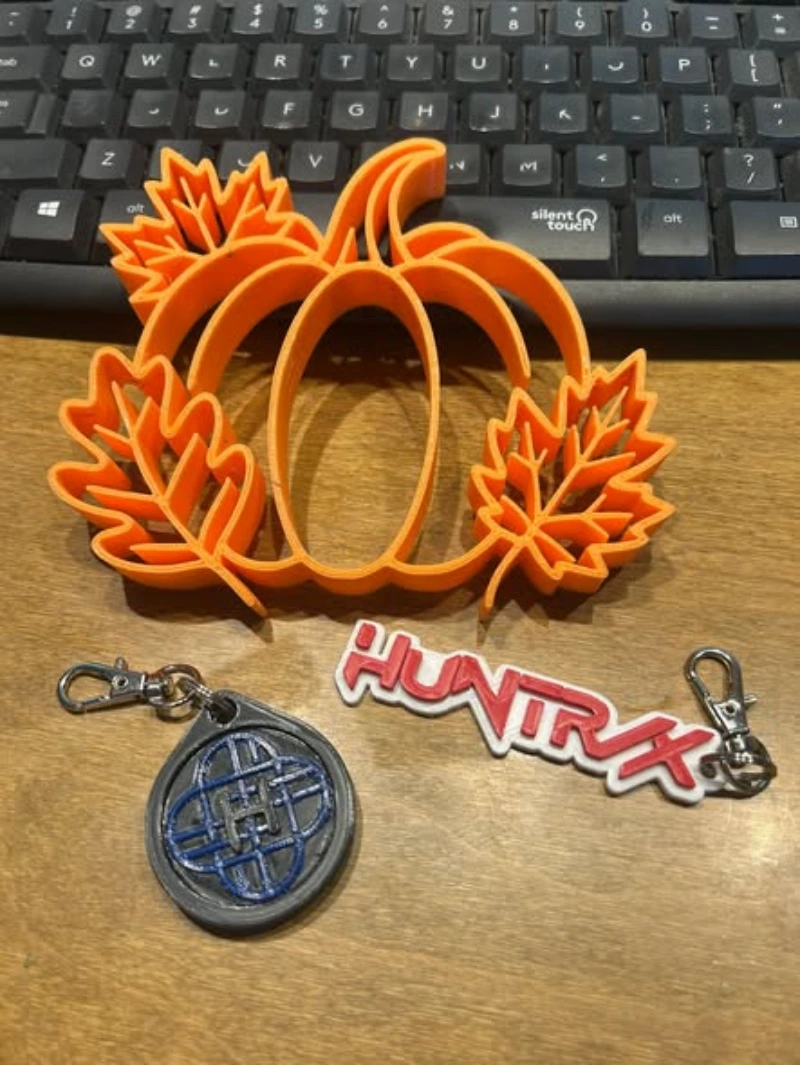
Injection molding is still an excellent manufacturing method for high-volume production.
PP and ABS are commonly used plastic materials for molded products, and injection molding provides good consistency and production efficiency once the mold has been developed.
However, injection molding requires tooling.
The basic process is:
Product design → Injection mold → Trial molding → Mold adjustment → Mass production
The mold cost is paid before large-scale production begins.
Therefore, injection molding is usually more suitable when the expected order quantity is high enough to justify the tooling investment.
When Should You Choose 3D Printing?
Choose 3D printing when:
- The order quantity is small
- You have many different designs
- The design is complex
- You need a fast prototype
- You want to test the market
- You want to avoid mold costs
- You need frequent design modifications
- You are developing seasonal or limited-edition products
When Should You Choose Injection Molding?
PP/ABS injection molding becomes more attractive when:
- The quantity is high
- The design is relatively stable
- You expect repeat orders
- You need consistent mass production
- The design is suitable for injection molding
- The tooling investment can be spread across a large order volume
For projects of around 20,000 pieces or more, injection molding may become a more economical choice, especially when the design is relatively simple and repeat production is expected.
3D Printed Cookie Cutter vs. Stainless Steel Cookie Cutter
Stainless steel remains one of the most popular materials for cookie cutters.
At Canzo, custom cookie cutters can be produced using materials such as 430 stainless steel and 304 stainless steel, depending on the customer’s requirements.
Stainless steel offers excellent durability and is particularly suitable for traditional cookie cutter shapes and larger-volume production.
However, stainless steel cutters are manufactured through a physical forming process, which means extremely complicated outlines can be more difficult to produce.
3D printing provides greater design flexibility.
| Feature | 3D Printed | PP/ABS Injection Molded | Stainless Steel |
|---|---|---|---|
| Mold required | No | Yes | Usually tooling/forming required |
| Small quantity | Excellent | Less suitable | Possible, but less economical |
| Large quantity | Possible | Excellent | Excellent |
| Complex shapes | Excellent | Good | More limited |
| Design modification | Very easy | More difficult | More difficult |
| Prototype speed | Very fast | Slower | Slower |
| Tooling cost | No traditional mold | Required | Required/setup cost |
| MOQ | Flexible | Usually higher | Usually higher |
| Best application | Small & complex designs | High-volume production | Durable mass production |
The key point is that 3D printing does not replace stainless steel or injection molding. Instead, each manufacturing method has its own ideal application.
3D Printing Also Offers Flexible Production Capacity
A common misconception is that 3D printing is only suitable for prototypes.
Modern 3D printing can also be used for small and medium production runs.
Because production capacity can be increased by adding more printers, manufacturers can scale production according to the required quantity.
For custom cookie cutter orders of up to around 10,000 pieces, 3D printing can be a practical solution when the design is complex or when avoiding tooling is important.
At Canzo, depending on the design and order quantity, we can arrange multiple printers to increase production capacity.
For many projects of up to 10,000 pieces, production, packaging, and shipment can typically be completed within approximately 15 days, subject to design complexity and order requirements.
This can be particularly valuable for seasonal products where timing is critical.
When Is 3D Printing the Best Choice?
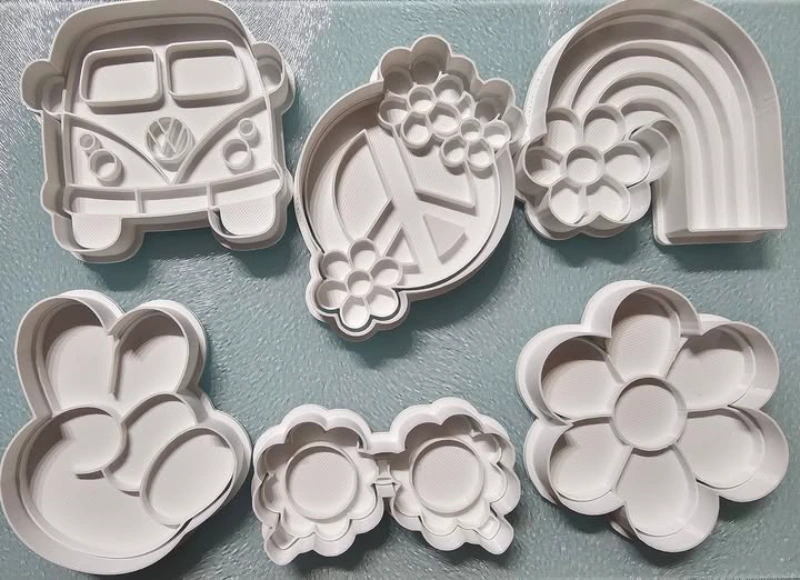
3D printed cookie cutters are especially suitable when you need low MOQ + complex designs + fast development.
For example:
Scenario 1: 100 Customized Cookie Cutters
You need 100 cookie cutters based on a unique mascot for a museum gift shop.
A traditional injection mold may not make economic sense.
3D printing is a strong choice.
Scenario 2: 500 Pieces With 10 Different Designs
You need 50 pieces of each of 10 different character designs.
Creating a separate mold for every design can quickly increase tooling costs.
3D printing can be much more flexible.
Scenario 3: 5,000 Pieces of a Complex Shape
You have a highly customized character shape and need several thousand pieces.
The design is difficult to produce using traditional stainless steel forming.
3D printing may still be an attractive option.
Scenario 4: 20,000+ Pieces of a Simple Design
You need 20,000 or more pieces of a relatively simple and stable design.
In this situation, the economics can change.
Injection molding or stainless steel production may become more cost-effective.
What Quantity Is Best for Each Manufacturing Method?
There is no single MOQ that works for every cookie cutter project. The best production method depends on the quantity, design complexity, tooling investment, expected repeat orders, and target cost.
As a general guideline:
Small quantity + complex design → 3D printing
Medium quantity + customized design → 3D printing or evaluate injection molding/stainless steel
20,000+ pieces + simple design → injection molding or stainless steel
The right choice should always be evaluated based on the specific design and production requirements.
How Does the Custom 3D Printed Cookie Cutter Process Work?
At Canzo Kitchenware, the process can be kept simple:
Step 1: Send Us Your Design
You can provide:
- 2D drawing
- Flat pattern
- AI/PDF artwork
- SVG file
- Image
- Logo
- Character design
- Existing sample
Step 2: We Create the 3D Model
Our team converts the design into a 3D printable cookie cutter model.
For many simple designs, the modeling process can be completed quickly.
Step 3: Rapid 3D Printing
Once the design is approved, we can print the physical sample.
In many cases, the first sample can be produced in approximately 1 hour.
Step 4: Sample Evaluation
You can check:
- Overall shape
- Dimensions
- Cutting edge
- Design details
- Embossing or stamping effect
- Packaging requirements
Step 5: Production
After approval, we arrange production according to the required quantity.
For larger orders, additional 3D printers can be used to increase production capacity.
Step 6: Packaging and Shipment
We can also provide customized packaging such as:
- OPP bags
- Header cards
- Tie-card packaging
- Hang tags
- Kraft boxes
- Color boxes
- Custom gift packaging
This allows you to receive a finished custom cookie cutter product, rather than only loose printed pieces.
Is a 3D Printed Cookie Cutter Right for Your Project?
The best manufacturing method depends on your project.
If you need a small quantity, a complex shape, fast prototyping, or no mold investment, 3D printing can provide significant advantages.
If you need 20,000+ pieces of a simple design, injection molding or stainless steel may offer better production economics.
Instead of choosing a manufacturing method based only on material, consider the complete picture:
Design complexity + quantity + tooling cost + development time + production lead time + expected repeat orders
At Canzo Kitchenware, we can evaluate your design and recommend the most suitable production method.
Whether you need custom 3D printed cookie cutters, PP/ABS injection-molded cookie cutters, or stainless steel cookie cutters, our team can help you develop the right solution for your project.
Looking for Custom 3D Printed Cookie Cutters?
Send us your 2D design, artwork, logo, or reference image, together with your estimated quantity.
Our team can help evaluate the design, create the 3D model, produce a rapid sample, and recommend whether 3D printing, injection molding, or stainless steel production is the most suitable option for your project.
Contact Canzo Kitchenware today to discuss your custom cookie cutter project.