Table of Contents
When choosing kitchen tools, one of the most common questions buyers ask is: nylon vs silicone utensils — which is better? Both materials are widely used in modern kitchens because they are lightweight, affordable, and safe for non-stick cookware. However, they perform very differently in terms of heat resistance, durability, flexibility, and food safety.
As a professional silicone kitchenware manufacturer in China, Canzo Kitchenware helps global brands, wholesalers, and importers customize high-quality cooking utensils for different markets. In this guide, we’ll compare silicone vs nylon cooking utensils in detail so you can choose the best option for your kitchen or product line.
What Are Nylon Cooking Utensils?
Nylon cooking utensils are made from food-grade synthetic plastic material. They are commonly used for spatulas, turners, ladles, pasta servers, and cooking spoons because they are lightweight, affordable, and relatively durable.
Advantages of Nylon Utensils
- Budget-friendly
- Lightweight and easy to handle
- Firm and rigid for flipping foods
- Safe for non-stick cookware
- Widely available in many designs
Nylon utensils are especially useful when cooking heavier foods like burgers, steaks, or thick sauces because they provide stronger support than silicone.
Disadvantages of Nylon Utensils
Although nylon utensils are popular, they have several limitations:
- Lower heat resistance
- Can melt or warp under high heat
- May release chemicals if overheated
- Can become brittle over time
- Less durable than silicone
Most nylon utensils can withstand temperatures around 400°F (204°C). Beyond that, they may soften, melt, or degrade.
What Are Silicone Cooking Utensils?
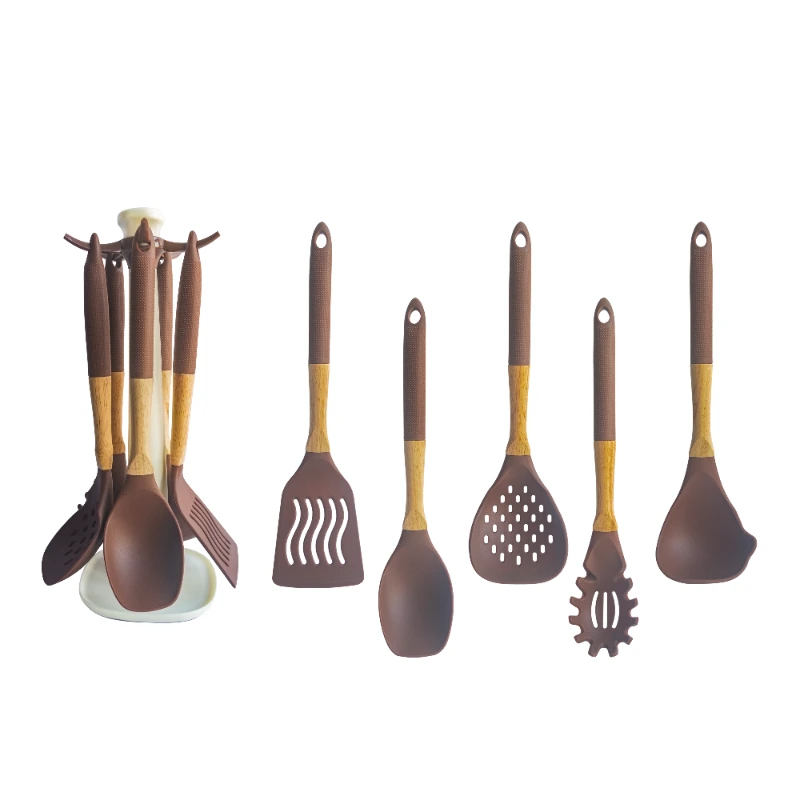
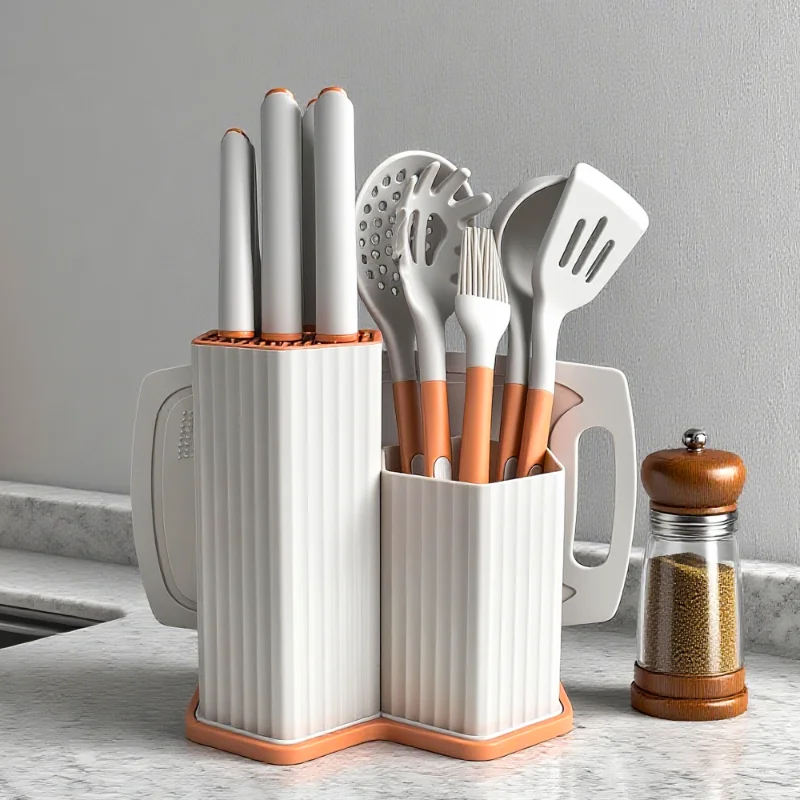
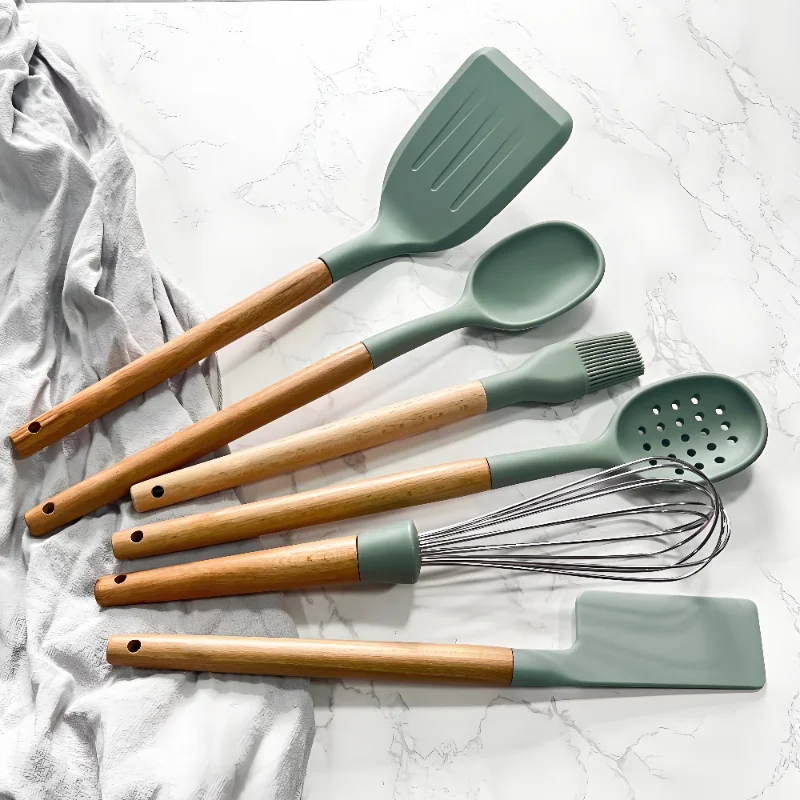
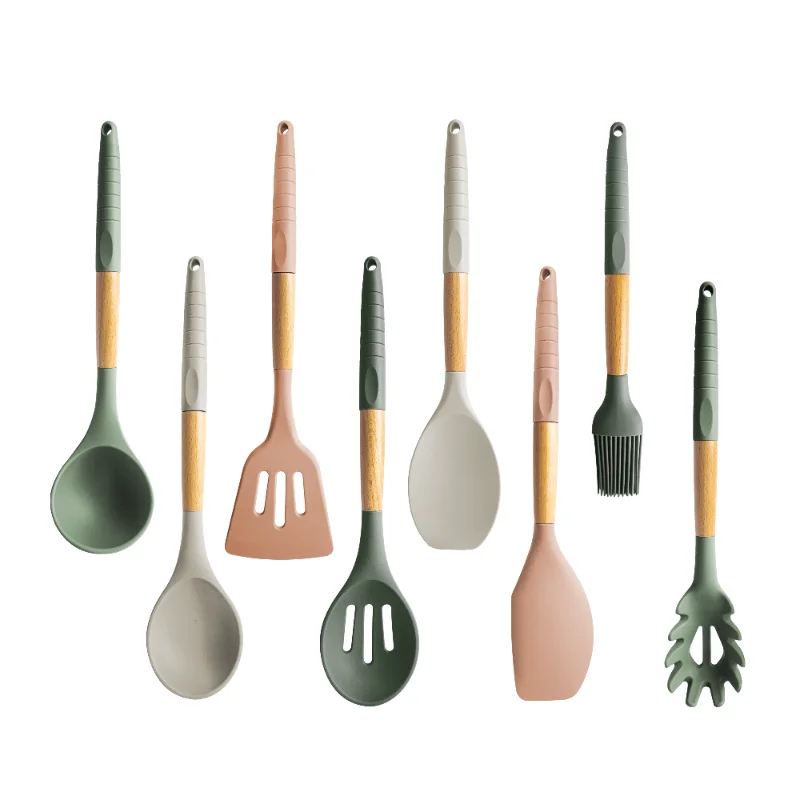
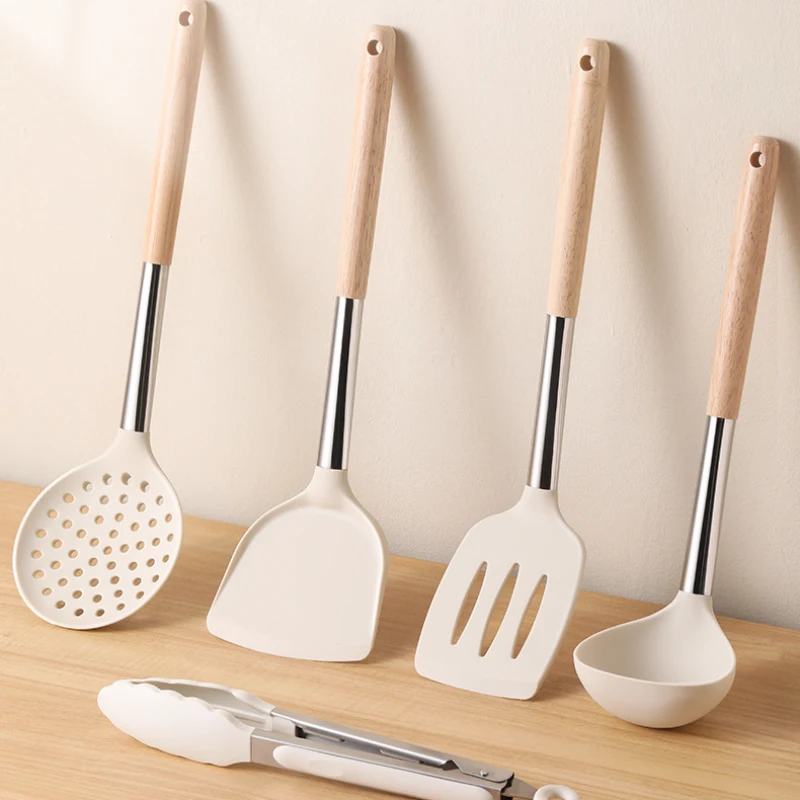
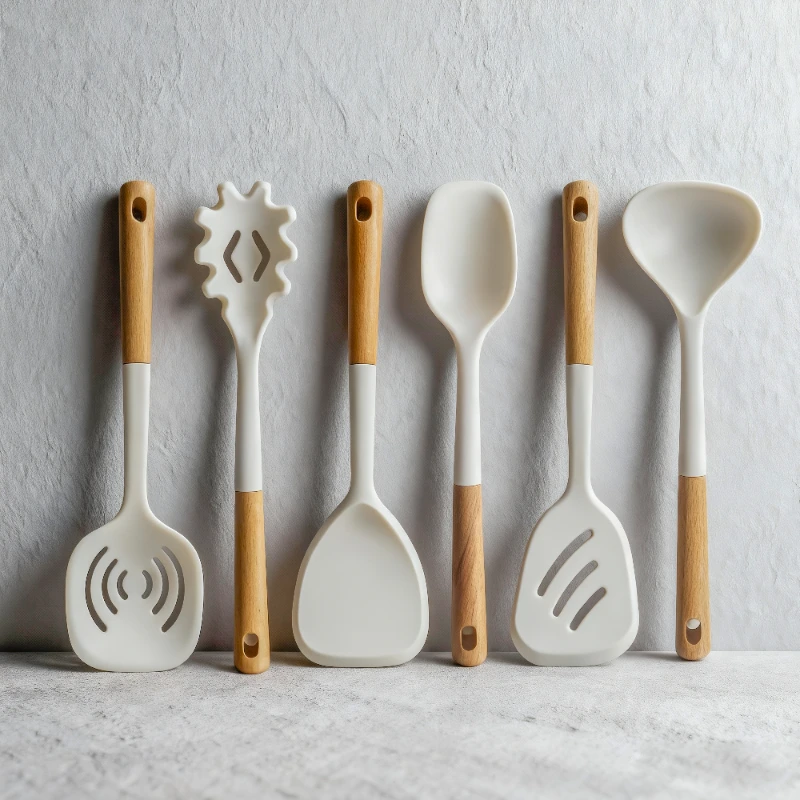
Silicone cooking utensils are made from food-grade silicone rubber, a flexible and heat-resistant synthetic material widely used in modern kitchens.
Silicone utensils have become increasingly popular because they are safe, durable, and ideal for non-stick cookware.
Advantages of Silicone Utensils
- Excellent heat resistance
- Flexible and durable
- Non-toxic and BPA-free
- Gentle on cookware surfaces
- Resistant to stains and odors
- Long service life
High-quality silicone utensils can withstand temperatures up to 600°F (315°C), making them ideal for frying, sautéing, baking, and high-heat cooking.
Disadvantages of Silicone Utensils
Silicone utensils also have a few drawbacks:
- Usually more expensive than nylon
- Softer and less rigid
- Less suitable for lifting heavy foods
Because silicone is flexible, some users prefer nylon for tasks that require firmness and control.
Nylon vs Silicone Utensils: Key Differences
1. Heat Resistance
The biggest difference between silicone vs nylon cooking utensils is heat resistance.
Silicone performs significantly better in high-temperature cooking environments. It can tolerate extreme heat without melting, warping, or releasing harmful substances.
Nylon, on the other hand, has a lower heat tolerance. If left in a hot pan too long, it may melt or deform.
| Feature | Nylon Utensils | Silicone Utensils |
|---|---|---|
| Heat Resistance | Up to 400°F (204°C) | Up to 600°F (315°C) |
| Melting Risk | Higher | Very Low |
| High-Heat Cooking | Limited | Excellent |
For professional kitchens and high-temperature cooking, silicone is usually the safer option.
2. Safety and Food Contact
When discussing nylon vs silicone utensils, food safety is another major concern.
Food-grade silicone is considered one of the safest materials for cooking utensils because it is:
- BPA-free
- Non-toxic
- Odor-resistant
- Chemically stable under heat
Nylon utensils are generally safe at normal cooking temperatures, but low-quality nylon products may release chemicals if overheated.
For health-conscious consumers, silicone utensils are often the preferred choice.
3. Durability and Longevity
Silicone utensils are generally more durable than nylon.
Nylon utensils can become brittle, crack, or discolor after long-term exposure to heat and repeated washing. Silicone remains flexible and maintains its shape even after years of use.
Which Lasts Longer?
- Silicone: Long-lasting and heat resistant
- Nylon: Good for moderate use but wears faster
If you are sourcing products for retail or private label brands, silicone utensils usually provide better long-term customer satisfaction.
4. Flexibility and Cooking Performance
Another important comparison in silicone vs nylon utensils is flexibility.
Nylon Utensils
Nylon utensils are firmer and more rigid, making them suitable for:
- Flipping burgers
- Stirring thick sauces
- Handling heavier foods
Silicone Utensils
Silicone utensils are softer and more flexible, making them ideal for:
- Scraping bowls
- Baking
- Mixing batter
- Non-stick cookware
- Delicate foods
A silicone spatula can easily scrape every bit of sauce or batter from a bowl, while nylon provides stronger support for cooking heavier ingredients.
5. Non-Stick Cookware Compatibility
Both nylon and silicone utensils are considered safe for non-stick cookware. However, silicone is gentler on delicate surfaces.
Silicone is completely non-abrasive and less likely to damage non-stick coatings over time.
For premium cookware protection, silicone utensils are the better choice.
Silicone vs Nylon Cooking Utensils: Which Is Better?
The answer depends on your cooking style and priorities.
Choose Nylon Utensils If You Need:
- Lower-cost kitchen tools
- Firmer utensils for flipping food
- Lightweight cooking utensils
- Basic everyday cooking tools
Choose Silicone Utensils If You Need:
- High heat resistance
- Safer food-contact materials
- Long-lasting kitchen utensils
- Better protection for non-stick cookware
- Flexible baking and cooking tools
For most modern kitchens, silicone utensils are considered the better long-term investment because of their durability, heat resistance, and food safety advantages.
Nylon vs Silicone Utensils for Businesses
For importers, wholesalers, and private label kitchenware brands, choosing between nylon and silicone utensils affects both product positioning and customer satisfaction.
Why Silicone Utensils Are More Popular Today
Global consumers are increasingly choosing silicone cooking utensils because they are:
- More durable
- Heat resistant
- BPA-free
- Eco-friendlier due to longer lifespan
- Premium-looking and modern
Silicone utensils also offer more customization possibilities, including:
- Custom colors
- Logo printing
- Wooden handles
- Stainless steel handles
- Custom packaging
- Gift box sets
At Canzo Kitchenware, we provide OEM & ODM silicone kitchen utensils for Amazon sellers, supermarkets, kitchenware brands, and wholesalers worldwide.
Conclusion
When comparing silicone vs nylon cooking utensils, both materials have their strengths. Nylon utensils are affordable, lightweight, and sturdy for daily cooking tasks. However, silicone utensils offer superior heat resistance, better durability, higher safety, and better protection for non-stick cookware.
For high-heat cooking and long-term kitchen use, silicone is generally the better option.
If you are looking for a reliable custom kitchen utensil manufacturer in China, Canzo Kitchenware offers professional OEM/ODM solutions for silicone cooking utensils, baking tools, and kitchen accessories.
FAQs
1. Which is safer: nylon or silicone cooking utensils?
Silicone cooking utensils are generally safer because they can withstand higher temperatures without releasing harmful chemicals.
2. Can nylon utensils melt?
Yes. Nylon utensils may melt or warp if exposed to temperatures above 400°F (204°C).
3. Are silicone utensils safe for non-stick cookware?
Yes. Silicone utensils are soft and non-abrasive, making them ideal for non-stick pans.
4. Which lasts longer: silicone or nylon utensils?
Silicone utensils usually last longer because they resist heat, cracking, and wear better than nylon.
5. Why are silicone cooking utensils more expensive?
Silicone utensils typically cost more because of their higher heat resistance, durability, and premium material quality.
6. Can silicone utensils be customized?
Yes. Silicone utensils can be customized with colors, logos, handles, packaging, and shapes for private label brands and wholesalers.