Table of Contents
Wooden kitchen utensils have been trusted by chefs and home cooks for centuries — and for good reason. They’re durable, heat-resistant, gentle on cookware, and naturally antibacterial. But not all wooden utensils are created equal. Knowing which type of wood is best can make a big difference in the quality, safety, and longevity of your cooking tools.
At Canzo Kitchenware, we specialize in producing and wholesaling premium kitchen utensils made from sustainable natural materials. In this guide, we’ll explore what makes the best wooden cooking utensils, which wood types perform the best, and how to properly care for them.
Why Choose Wooden Kitchen Utensils?
Wood is one of the most versatile and environmentally friendly materials in the kitchen. Compared with plastic or metal, wooden utensils offer several key advantages:
Gentle on cookware: Wood won’t scratch or damage non-stick or enamel surfaces.
Heat-resistant: Wood stays cool to the touch even when stirring hot food.
Sustainable and renewable: Wooden utensils come from natural resources that can be replenished.
Naturally antibacterial: Studies have shown that bacteria absorbed into wood die off over time, making it safer than plastic.
Aesthetic appeal: Each wooden spoon or spatula has a unique grain pattern that adds natural beauty to your kitchen.
Hardwoods vs. Softwoods: What’s the Difference?
When selecting the best wood for kitchen utensils, it’s important to understand the difference between hardwoods and softwoods.
Softwoods (like pine, fir, or cedar) are light and less dense. They’re great for construction, but too soft for utensils — they can absorb too much liquid and wear down quickly.
Hardwoods (like maple, beech, teak, or cherry) are dense, strong, and long-lasting. These are the preferred materials for most high-quality wooden kitchenware.
Hardwoods are more resistant to water, stains, and scratches. With proper care, a hardwood spoon or spatula can last for decades without cracking or splitting.
The Best Wood for Kitchen Utensils
Here are the most recommended types of wood used by professionals — and by Canzo Kitchenware — to produce durable, beautiful cooking tools:
1. Maple Wood
Maple is one of the most popular choices for kitchen utensils. It’s a tight-grained, non-porous hardwood that resists bacteria and moisture. Maple spoons and cutting boards are smooth, sturdy, and light in color, making them ideal for everyday cooking.
Best for: Stirring, mixing, and serving foods.
2. Beech Wood
Beech wood is another top contender for the best wooden cooking utensils. It’s strong, wear-resistant, and naturally antibacterial. Beech spoons and spatulas have a fine texture and feel comfortable to hold.
Best for: Professional chefs who value both quality and balance.
3. Teak Wood
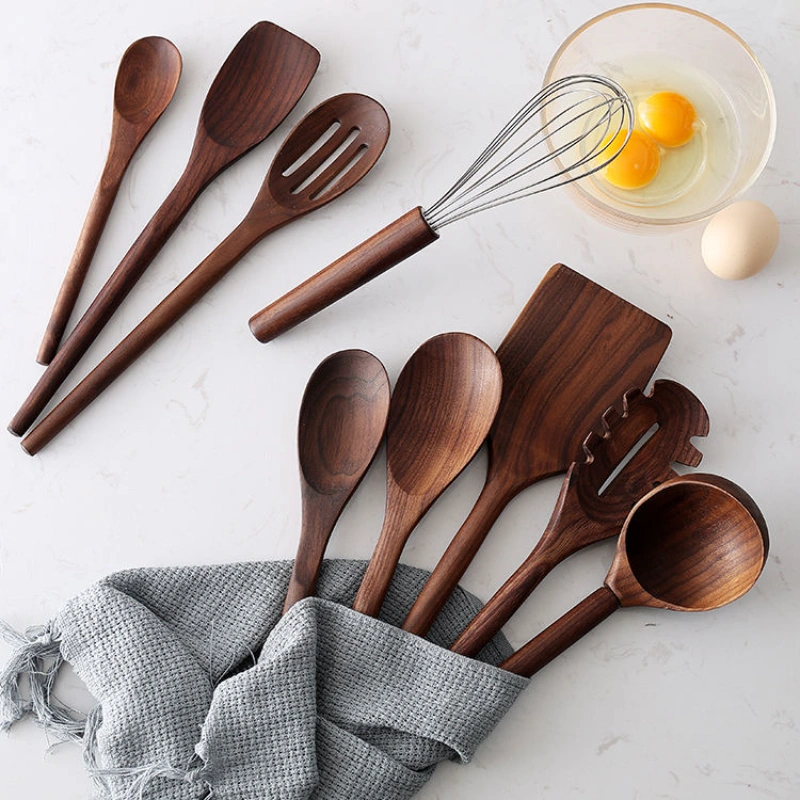
Teak is known for its natural oils that resist water and stains. It’s a favorite for those who want utensils that are both durable and visually stunning. The rich golden-brown color and distinctive grain pattern make teak utensils an elegant addition to any kitchen.
Best for: Long-term use and premium, decorative utensil sets.
4. Bamboo
While technically a grass, bamboo performs like a hardwood. It’s lightweight, eco-friendly, and heat-resistant. Bamboo utensils are a sustainable choice for those who want natural materials without sacrificing strength.
Best for: Eco-conscious consumers and bulk buyers looking for cost-effective options.
5. Cherry Wood
Cherry wood darkens beautifully with age and use. It’s a fine-grained hardwood that resists moisture and looks elegant in any kitchen.
Best for: Artisanal kitchen sets and gifts.
How to Care for Wooden Cooking Utensils
Proper maintenance can greatly extend the life of your utensils. Follow these simple steps to keep them in perfect condition:
Hand-wash only – Never use a dishwasher. Rinse with warm water and mild soap immediately after use.
Dry thoroughly – Leave them to air dry upright in a well-ventilated area.
Avoid soaking – Prolonged water exposure can cause swelling or cracking.
Oil regularly – Apply food-grade mineral oil or beeswax every few weeks to prevent drying out.
Remove odors naturally – Rub with lemon juice and salt to keep utensils fresh and clean.
With proper care, your wooden spoons and spatulas will stay smooth, hygienic, and beautiful for years.
Best Wooden Cooking Utensils by Canzo Kitchenware
There’s no one-size-fits-all answer — each plastic serves a different kitchen need:
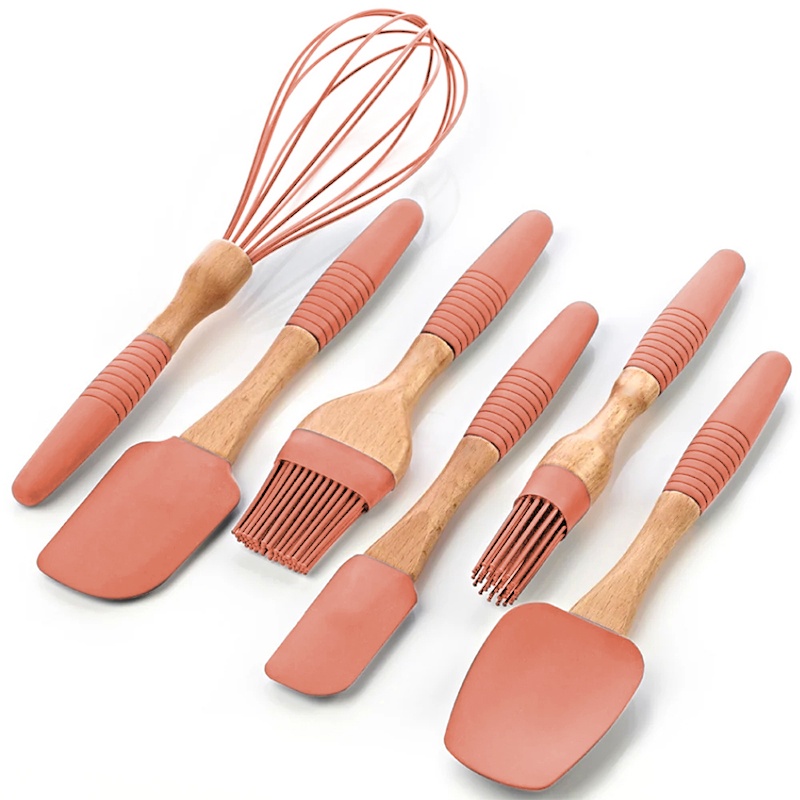
At Canzo Kitchenware, we manufacture and wholesale a wide range of wooden kitchen utensils using carefully selected hardwoods like beech, teak, and bamboo. Our OEM/ODM service allows global brands and distributors to customize:
Material selection: Beech, teak, bamboo, or other sustainable wood.
Surface finish: Polished, oiled, or matte.
Logo customization: Laser engraving, embossing, or UV printing.
Packaging options: Eco-friendly kraft boxes, FSC-certified paper, or color boxes.
We ensure every piece is safe for food contact, smooth to the touch, and finished with natural oils for long-term use.
Final Thoughts
When choosing the best wood for kitchen utensils, look for dense, non-porous hardwoods such as maple, beech, or teak. These materials provide durability, hygiene, and beauty — the perfect combination for both home cooks and professional chefs.
Whether you’re outfitting a new kitchen or sourcing high-quality wooden utensil sets for your brand, Canzo Kitchenware offers customizable solutions backed by expert craftsmanship and sustainable practices.
Rediscover the warmth and reliability of wood — and make your kitchen both functional and naturally beautiful.
FAQ: Best Wood for Kitchen Utensils
1. What is the best wood for kitchen utensils?
Hardwoods such as beech, maple, and teak are considered the best woods for kitchen utensils. They’re durable, dense, and naturally resistant to bacteria and moisture, making them perfect for spoons, spatulas, and cutting boards.
2. Are wooden kitchen utensils safe to use?
Yes. Wooden cooking utensils are naturally antibacterial and safer than plastic because bacteria absorbed into wood cannot multiply. When cleaned properly, they are one of the most hygienic materials for kitchen use.
3. What’s the difference between hardwood and softwood utensils?
Hardwood utensils (like beech or teak) are stronger, denser, and last longer, while softwood utensils (like pine) can wear down or absorb liquids more easily. That’s why hardwoods are recommended for kitchenware.
4. How should I clean and maintain wooden utensils?
Always hand wash with mild soap and warm water — never use a dishwasher. Dry them completely after washing, and apply food-grade mineral oil or beeswax once a month to keep the wood hydrated and crack-free.
5. Can Canzo Kitchenware customize wooden utensils for my brand?
Absolutely! Canzo Kitchenware offers OEM & ODM services, including:
Custom material selection (beech, teak, bamboo, etc.)
Laser logo engraving or color printing
Eco-friendly packaging (FSC kraft box, paper sleeve, color box)
DDP shipping to global destinations
6. Does Canzo Kitchenware provide samples or product testing?
Yes. We provide free in-stock samples and custom samples for bulk orders. All products can be tested according to LFGB, FDA, or EU food-contact standards upon request.
7. What is the production lead time for wooden kitchen utensil sets?
Typical lead time is 25–35 days after sample approval. For urgent or repeat orders, we can shorten the schedule depending on production capacity.
8. What payment terms do you accept?
We support T/T, Alibaba Trade Assurance, and PayPal for sample orders. For bulk production, we accept 30% deposit + 70% balance before shipment.