Table of Contents
When sourcing wholesale stainless steel kitchenware, choosing the right material is crucial. Two of the most commonly used grades in kitchen utensils are 304 and 430 stainless steel. Understanding the difference between 304 vs 430 stainless steel can help importers, distributors, and brand owners select the right products for quality, performance, and cost-efficiency.
In this blog, we compare 304 stainless steel vs 430 stainless steel, especially in the context of food-grade applications like cooking utensils, cutlery, kitchen tools, and cookware.
What is Stainless Steel?
Stainless steel is an alloy composed mainly of iron, with a minimum of 10.5% chromium to resist rust and corrosion. Depending on the chemical composition, different grades offer varying properties in strength, corrosion resistance, durability, magnetism, and cost.
Two major families include:
-
Austenitic (like 304) – non-magnetic, highly corrosion-resistant.
-
Ferritic (like 430) – magnetic, more affordable, decent corrosion resistance.
304 vs 430 Stainless Steel: Key Differences
| Feature | 304 Stainless Steel | 430 Stainless Steel |
|---|---|---|
| Category | Austenitic | Ferritic |
| Corrosion Resistance | Excellent (due to high nickel) | Moderate |
| Nickel Content | 8–10.5% | <0.75% |
| Magnetic | No (except after cold work) | Yes |
| Weldability | Excellent | Limited |
| Formability | High | Good |
| Common Uses | Premium kitchen tools, cookware, food processing | Budget kitchen utensils, decorative panels |
| Cost | Higher | Lower |
| Durability | Long-term, ideal for frequent use | Decent, but not for harsh environments |
Why 304 Stainless Steel Is Preferred for Premium Kitchenware
| Typical Analysis | Grade 304 | Grade 304L |
| Chrome | 18.00-20.00 | 18.00-20.00 |
| Nickel | 8.00-11.00 | 8.00-11.00 |
| Carbon | 0.08 max. | 0.03max. |
| Manganese | 2.00 max. | 2.00 max. |
| Silicon | 1.00 max. | 1.00 max. |
| Molybdenum | ||
| Other | ||
| Mechanical Properties Brinell Hardness |
170 | (Annealed) 160 |
| Tensile–KSI | 85 | 85 |
| Yield–KSI | 34 | 34 |
| Elongation in 2″-% | 60 | 60 |
| Red. in Area-% Min | 70 | 70 |
| Welding Characteristics |
Very good – tough welds | |
| Machining Compared to B1112 Screw Stock |
45% | |
| Specifications AISI 304 (Bar) |
304 (Bar) | 304L (Bar) |
| ASTM | A276,A479,A580 | A276,A479 |
| AMS 5639 | 5639 | 5647 |
| QQS 763 | 763 | 763 |
| AISI 304 (Sheet) | 304 (Sheet) | 304 (Plate) |
| ASTM A240 | A240 | A240 |
| AMS 5513 | 5513 | 5513 |
304 stainless steel, also known as 18/8 stainless, is widely regarded as food-grade stainless steel. It contains both chromium (18%) and nickel (8%), which significantly enhances its corrosion resistance—especially in humid or acidic kitchen environments.
At Canzo Kitchenware, we recommend 304 for:
-
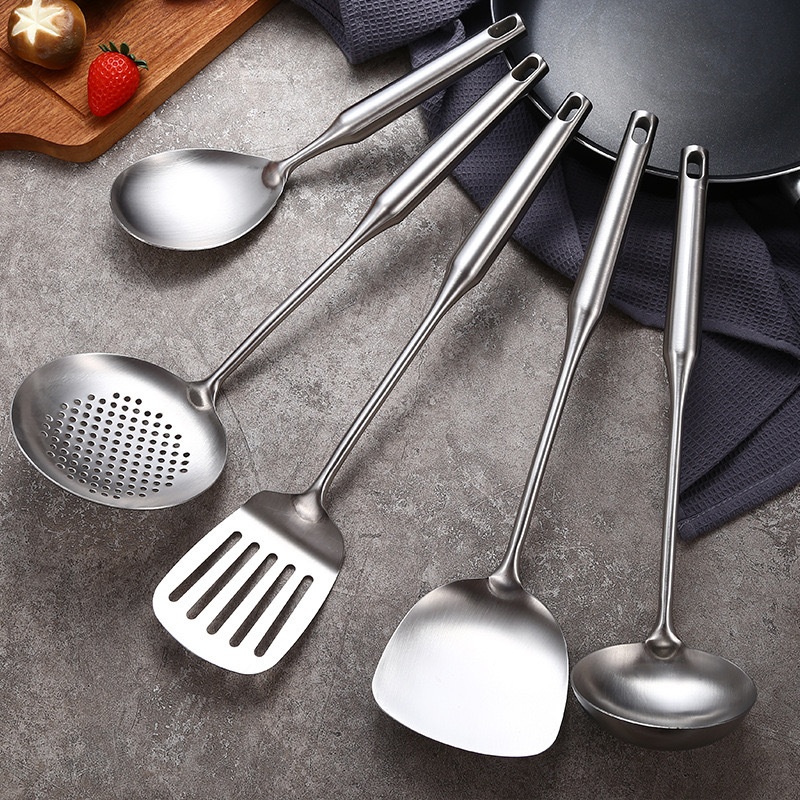
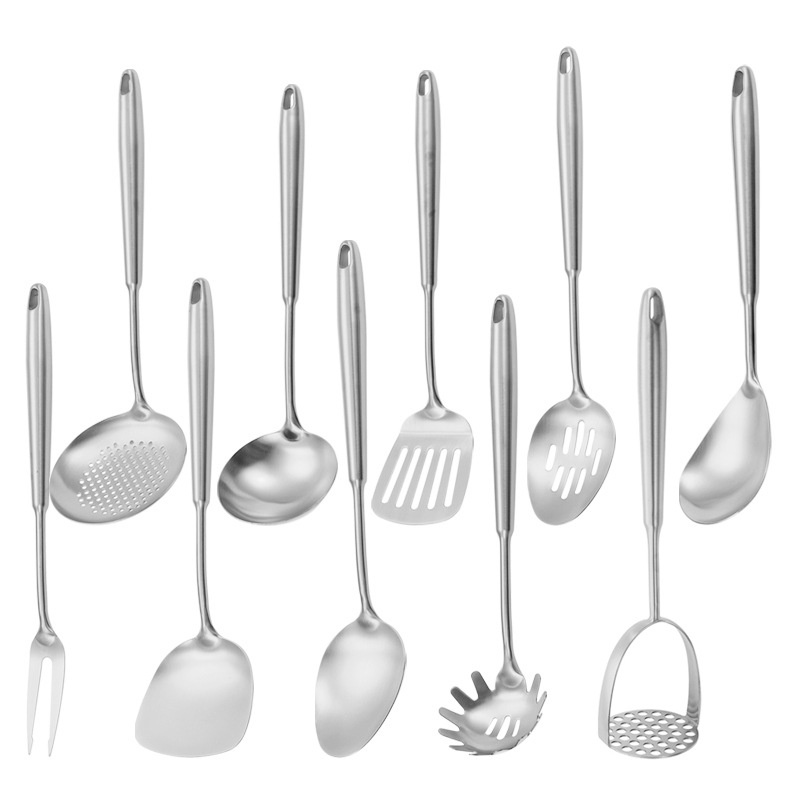
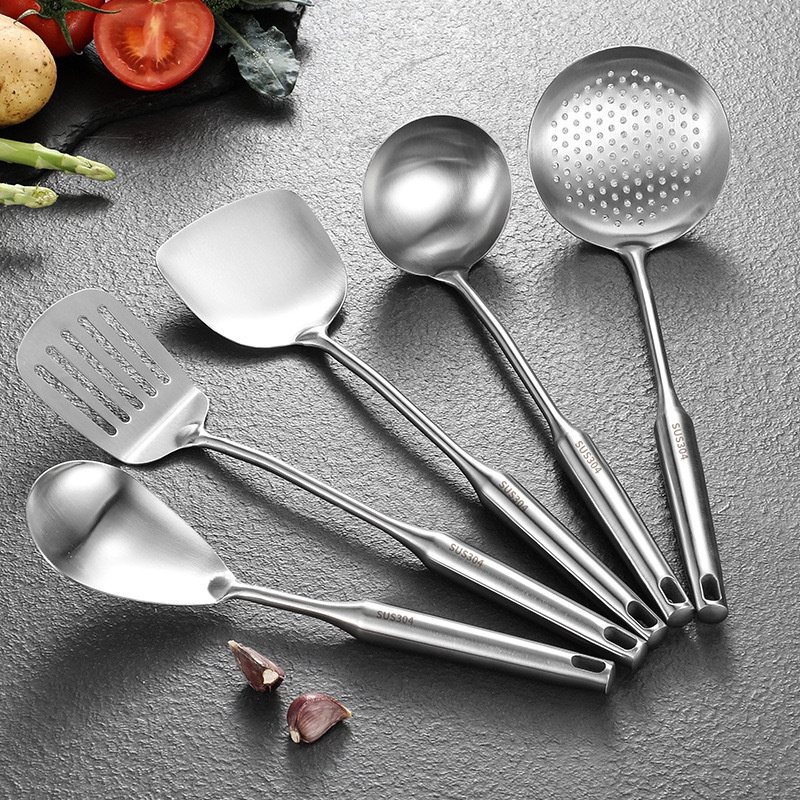
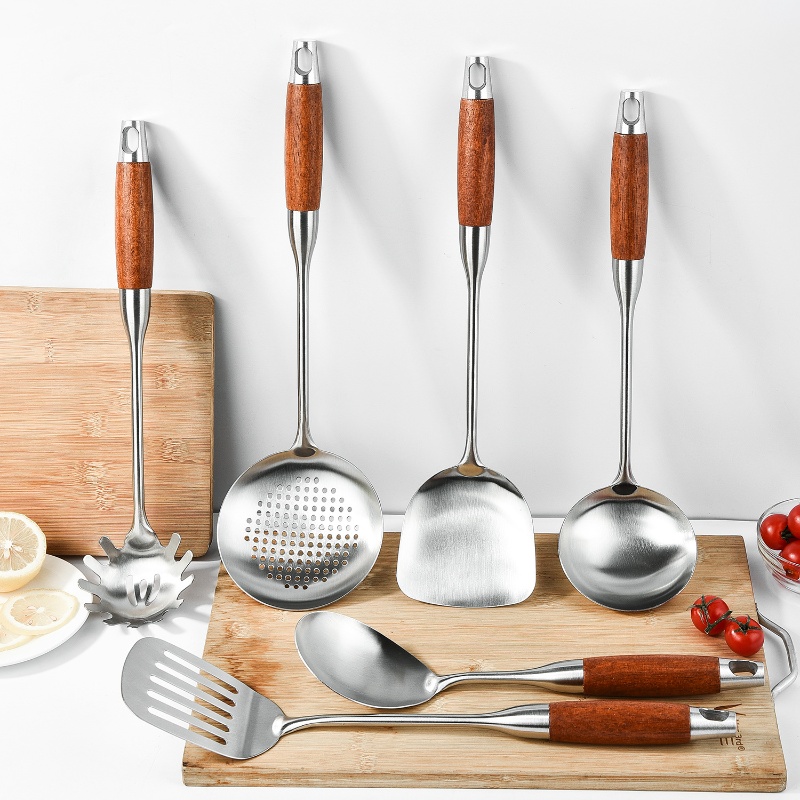
Premium stainless steel cooking utensils (ladles, turners, skimmers)
-
Food-grade storage containers
-
Stainless steel mixing bowls
-
Professional cookware (sauté pans, pots)
Advantages of 304 material:
-
Resists rust, acids, and salts.
-
Safe for dishwasher, high-heat cooking, and frequent cleaning.
-
Excellent aesthetic finish for retail markets.
When 430 Stainless Steel Makes Sense
| Typical Analysis | Grade 430 |
| Chrome | 14.00 – 18.00 |
| Carbon | .12 max. |
| Nickel | |
| Manganese | 1.0 max. |
| Silicon | 1.0 max. |
| Molybdenum | |
| Other | |
| Mechanical Properties Brinell Hardness |
(Annealed) 155 |
| Tensile–KSI | 75 |
| Yield–KSI | 45 |
| Elongation in 2″-% | 30 |
| Red. in Area-% Min | 65 |
| Welding Characteristics |
Fair – Brittle welds Slight response to annealing |
| Machining Compared to B1112 Screw Stock |
54% |
| Specifications AISI |
430 (Sheet/Plate) 430 |
| ASTM | A176 |
| AMS | 5503 |
430 stainless steel is more affordable and still offers decent corrosion resistance thanks to its 16–18% chromium content. It’s magnetic, which makes it compatible with induction cooktops and magnetic storage strips. However, it lacks nickel, making it less resistant to long-term exposure to moisture or food acids.
We typically use 430 stainless steel in:
-
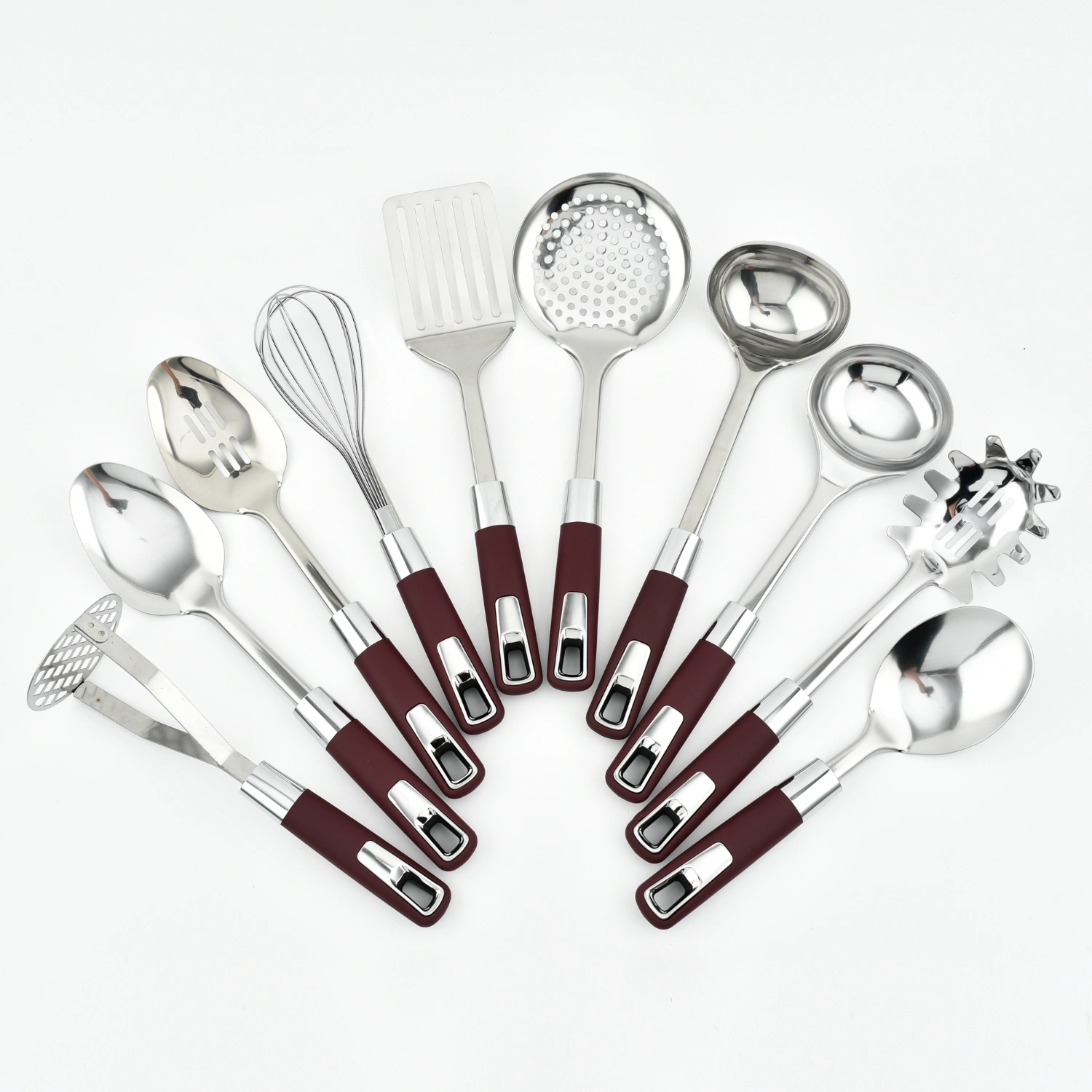
Economy-grade kitchen utensils
-
Baking sheets
-
Backplates and handles
-
Kitchen knife blades (magnet-friendly)
Advantages of 430:
-
Lower cost for budget product lines
-
Suitable for dry food applications or decorative kitchen items
-
Magnetic, ideal for storage-friendly designs
430 vs 304 Stainless Steel for Cooking Utensils: Which to Choose?
If your goal is durability, food safety, and brand reputation, 304 stainless steel is the better long-term investment. It’s ideal for high-end utensils that will be used daily and washed frequently.
However, 430 stainless steel is a smart choice for affordable lines, promotional kitchen tools, or items not exposed to acidic foods or wet storage conditions.
Use Case Example:
-
A premium ladle designed for soup kitchens or restaurants: go with 304.
-
A budget-friendly skimmer for home-use gift sets: 430 may be enough.
Corrosion Resistance: 304 vs 430
-
304 stainless steel provides superior resistance to corrosion due to its nickel content, making it ideal for long-term exposure to food, salt, and acidic environments.
-
430 stainless steel resists oxidation but may rust or stain in damp or acidic conditions over time.
Magnetism: 304 vs 430 Stainless Steel
-
304 is non-magnetic, often preferred in hospital and laboratory-grade tools.
-
430 is magnetic, useful for magnetic tool strips and induction cookware.
This is especially relevant for utensils like kitchen knives, peelers, and tongs, which are frequently stored magnetically.
Hardness Comparison
Hardness (measured by Brinell Hardness Number):
-
304: ~201 BHN
-
430: ~183 BHN
While both are strong enough for everyday kitchen use, 304 is slightly harder and more wear-resistant, making it better for tools with frequent abrasion.
Which One is Better for Wholesale Kitchenware?
At Canzo Kitchenware, we offer both grades to support your market needs:
-
Choose 430 stainless steel if your customers prioritize affordability and magnetic compatibility.
-
Choose 304 stainless steel for premium, food-grade cookware and utensils with a longer lifespan and better performance.
Whether you’re launching a new product line or customizing OEM utensils, we can help you choose the right material and finish for your market.
Final Thoughts: SS 430 vs 304 for Your Brand
In summary, 430 vs 304 stainless steel is a classic balance between cost and quality. Both have their place in the kitchenware industry, and understanding their strengths will help you offer better solutions to your customers.
📌 304 stainless steel = Premium, corrosion-resistant, long-term performance
📌 430 stainless steel = Budget-friendly, magnetic, suitable for light-use products
Why Choose Canzo Kitchenware?
As a leading wholesale kitchenware manufacturer in China, we provide:
-
Custom mold and branding services
-
Full range of 430 and 304 stainless steel cooking utensils
-
Low MOQs and factory-direct pricing
-
Fast shipping to USA, Europe, Africa, and beyond
Contact us today for a product catalog or to request samples!
FAQ: 304 vs 430 Stainless Steel for Kitchenware
Q1: What is the main difference between 304 and 430 stainless steel?
A: The key difference is in the composition. 304 stainless steel contains nickel (8-10.5%), which gives it superior corrosion resistance and makes it non-magnetic. 430 stainless steel has little to no nickel, making it more affordable, magnetic, but less corrosion-resistant.
Q2: Which is better for food-grade kitchen utensils?
A: 304 stainless steel is the preferred food-grade material. It’s commonly used for cookware, food containers, and professional kitchen utensils due to its excellent rust resistance, easy cleaning, and long lifespan.
Q3: Is 430 stainless steel food-safe?
A: Yes, 430 stainless steel is food-safe and complies with most food contact regulations. However, it’s more suitable for dry or low-moisture applications, and not ideal for acidic foods or environments with prolonged exposure to moisture.
Q4: Is 304 or 430 stainless steel magnetic?
A: 430 stainless steel is magnetic, which is why it’s used in knife blades and items designed for magnetic storage. 304 stainless steel is non-magnetic in its natural state, but can become slightly magnetic after cold working.
Q5: Why is 304 stainless steel more expensive than 430?
A: The nickel content in 304 stainless steel makes it significantly more corrosion-resistant and easier to form and weld. Nickel is a relatively costly alloying element, which increases the overall material price compared to 430.
Q6: Can I use 430 stainless steel for high-end cookware?
A: We don’t recommend 430 for premium cookware that requires frequent washing, high-heat exposure, or acidic food contact. It’s better suited for cost-effective kitchen tools, oven-safe accessories, or decorative finishes.
Q7: Which grade should I choose for induction-compatible utensils?
A: Choose 430 stainless steel for induction compatibility because it’s magnetic. Many brands use 430 in the base of cookware or utensils for this reason.
Q8: Does Canzo Kitchenware offer both 304 and 430 stainless steel options?
A: Yes! At Canzo Kitchenware, we manufacture and wholesale a full range of stainless steel kitchenware using both 304 and 430 grades, depending on your market needs and budget. Custom materials and specifications are also available.
Q9: How do I know which stainless steel grade to choose for my market?
A: It depends on your target audience and product positioning:
-
Choose 304 if your customers value premium quality, hygiene, and durability.
-
Choose 430 if you’re targeting cost-sensitive markets or promotional kitchenware.
Our team can help you select the best material based on your requirements.
Canzo Silicone Kitchenware Products Wholesale